How Flooding & Insurance Are Quietly Changing Oʻahu Property Values (What Homeowners Need to Know in 2026)
Living on our beautiful island means we know how to handle a rainy season. But if you’ve been paying attention to the weather so far in 2026, you know things are feeling a bit different. We aren't just dealing with muddy hiking trails or ruined beach days anymore; we are having serious conversations about property risk.
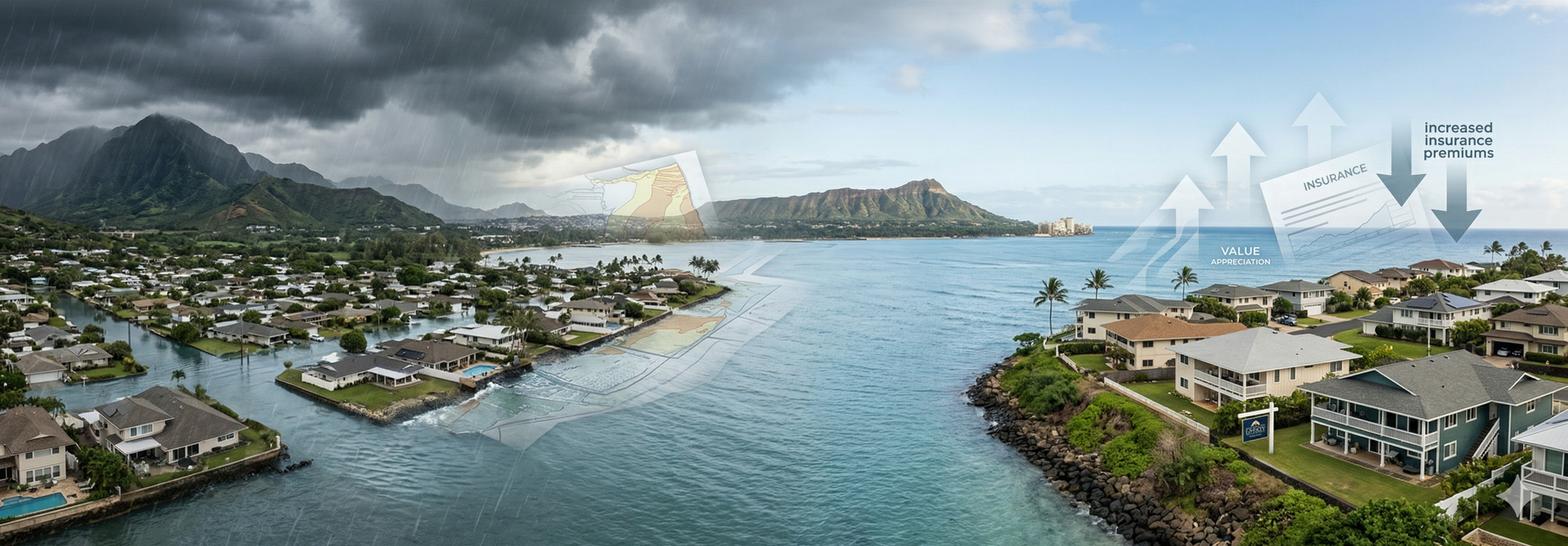
Back in February and March, intense rain and flash floods hit the North Shore (like Waialua and Haleiwa), the Windward side, and even parts of town. Because the ground was already totally soaked, the extra water had nowhere to go. It caused major disruptions, flooded homes, and caused so much damage that the governor warned total losses could top $1 billion.
If you own a home or an investment property here, this weather pattern is quietly changing the real estate market. Here is what you need to know to protect your investment.
Why Floods Change the Math on Your Property
When buyers and investors look at your home today, they aren't just looking at the beautiful views. They are thinking about what it will cost to own the property for the next 10 to 30 years.
Flooding changes those costs in three simple ways:
- The Fear Factor: Buyers worry about future repair bills, cleaning up mold, or having to leave the house during a storm. This worry makes them less willing to pay top dollar.
- Extra Monthly Bills: If your property is in a flood zone, banks usually force the buyer to get flood insurance. This makes the monthly payment much higher, which means buyers can't afford to offer as much for the house.
- Changing Insurance Rules: The government has a new way of pricing flood insurance (called Risk Rating 2.0). Now, they look at exactly how close a house is to the water and how high off the ground it is. Two houses on the exact same street might have totally different insurance bills!
The Proof: Oahu Prices Are Already Shifting
This isn't just a guess. Studies done right here in Hawaiʻi show that flood risk is already changing what people will pay:
- Lower Sales Prices: A recent Oahu study found that homes facing chronic flood risks sold for about 9% to 14% less. For investors, it is important to know this hit multi-family properties the hardest.
- Slower Growth: Another study showed that coastal properties in Hawaiʻi aren't growing in value as fast as safe, inland homes. Oʻahu is feeling this slowdown the most.
The takeaway: Even though Oahu real estate is strong, homes near flood zones might take longer to sell or require tougher negotiations.
Flood Maps Are Helpful, But Not Perfect
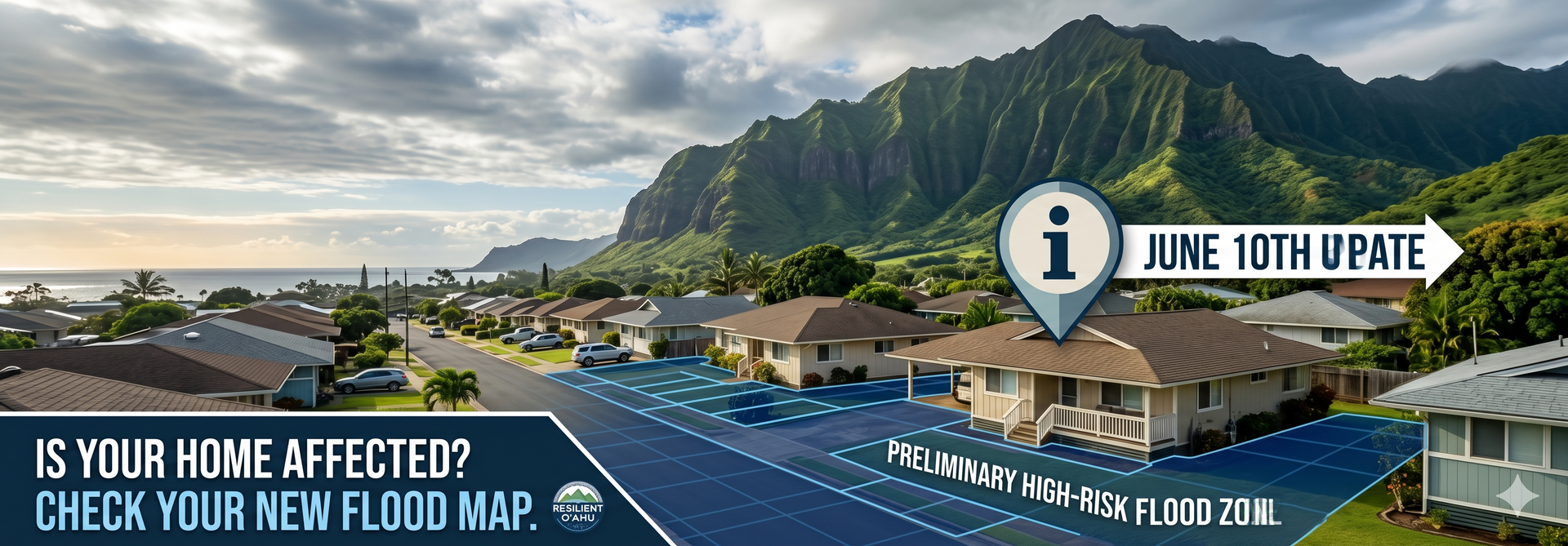
The government recently updated our local flood maps. These maps are super important because they decide if you have to buy flood insurance.
But here is the catch: maps cannot predict the future. City planners warn that these maps don't fully show what happens when sea levels rise or when we get these crazy, intense rain patterns.
Don't just trust a single map. It is smart to look at future coastal projections and talk to a pro before the next storm hits.
3 Easy Steps to Protect Your Property Now
The best time to act is when the sun is shining! Here is what you should do this week:
- Check Your Coverage: Standard home or landlord insurance does not cover floods. You need a separate policy. Call your agent to make sure you are fully covered.
- Take a Video Tour: Walk through your property with your phone and take a video of everything. Keep your insurance papers saved online. If a flood happens, this video is your proof of what you lost.
- Know the Drill: If you do get flooded, call your insurance right away. Don't throw away damaged items until the insurance adjuster sees them, and don't make big permanent repairs until you get the green light.
Flooding is not only a repair issue—it’s becoming a pricing issue. In 2026, Oahu homeowners are seeing that flood exposure, map updates, and insurance rules can quietly influence what buyers will pay and how smoothly transactions close. The good news is that homeowners who document, insure, and plan early can protect both their property and their negotiating position—before the next “rain bomb” arrives.
Curious how these new weather patterns and insurance rules are affecting your specific Oahu neighborhood? Don't wait for the next storm to find out. Send me a message today for a complimentary home valuation. As your local expert at Royal Realty, I'll help you build a clear strategy to protect your equity and get the most out of your home when it's time to sell.
Flood Insurance
To help residents navigate the claims process, the Hawaiʻi Insurance Division has developed a Post-Disaster Insurance Claims Guide, My Insurance Doesn't Cover What?, and an instructional video on how to file an insurance claim. Consumers may also contact the Hawaiʻi Insurance Division at 1-844-808-DCCA (3222) or visit cca.hawaii.gov/ins for additional claim-filing tips, disaster recovery resources and assistance with insurance-related concerns.
More information on flood insurance is available at Floodsmart | National Insurance Program.
MORE RESOURCES
- Hawai‘i Agriculture Disaster Response Statewide Rapid Assessment Tool: Find recovery programs for Hawai‘i's agricultural producers.
- Kona Low Storm Recovery (City & County of Honolulu): Information from the Department of Emergency Management to support Oahu residents impacted by the flooding
- March Kona Storm Informational Page (Maui County): Information from Maui Emergency Management Agency including post-flood recovery and community resources
- Hawai‘i County Civil Defense Agency: Report residential and commercial damages and request for assistance
- Kaua‘i Emergency Management Agency: Information and resource links for Kaua‘i County
- Aloha United Way 211: Services to connect people with local resources including food, clothing, supplies, transportation and more. Call 211 statewide for updates on emergency shelters, food distribution centers, and other non-emergency needs.
- Hawai‘i Foodbank: Serves Oʻahu and Kauaʻi
- Hawai‘i Food Basket: Serves Hawaiʻi County
- Maui Food Bank: Serves Maui County