The Silent Threat: How a Forged Deed Could Cost You Your Oʻahu Home
Owning a home on Oʻahu is a dream, but lately, that dream has become a target for scammers. As a local Realtor, I’ve noticed a troubling rise in fraudulent activity—from "buyers" who refuse to get on a call to "sellers" who can’t meet in person. The red flags are waving everywhere.
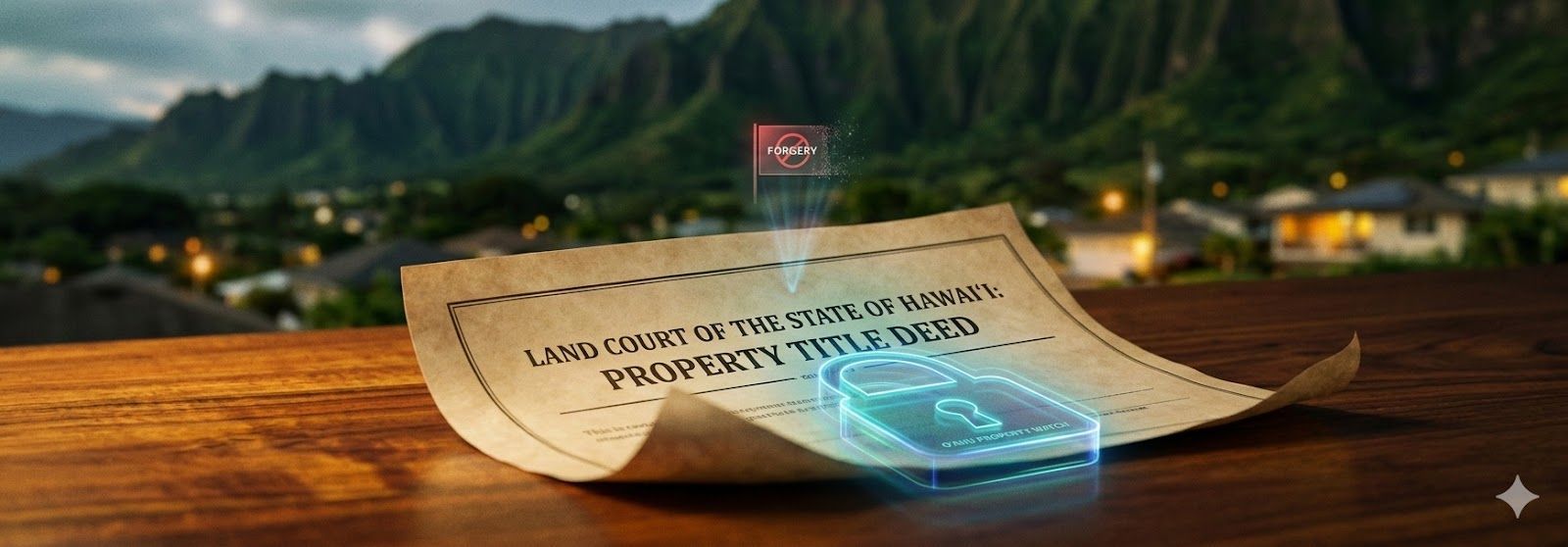
In late 2025, the Hawaiʻi Department of the Attorney General even indicted a group for a scheme involving forged deeds and stolen properties right here on Oʻahu. Scammers are recording fake deeds, then trying to sell the home or use it as collateral for a loan. Since property recording is a massive, automated operation, forged documents can sometimes slip into the public record. Once they are there, they generally can’t be removed without a court order.
Who is Most at Risk?
Local reporting shows that fraudsters often target "low-activity" properties, including:
- Vacant homes or lots.
- Properties held in trusts where owners are spread across different islands or the mainland.
- Homes with "absent" owners who may not be checking their mail or records regularly.
Your Oʻahu Homeowner Prevention Checklist
The best defense is a combination of monitoring, smart habits, and identity protection.
1. Monitor Your Records (The Hawaiʻi Way)
- Sign up for BOC Property Watch alerts: The Bureau of Conveyances offers this service to email you the moment a document is recorded under your name. While it doesn't stop fraud, it gives you the early warning you need to take action.
- Registration Link: dlnr.hawaii.gov/boc/property-watch/
2. Smart Habits
- Check your tax records: Periodically search your Oʻahu property record online to notice if your mailing address or ownership indicators change unexpectedly.
- Monitor your home online: Set up alerts for your address on sites like Zillow. Scammers often try to market or sell a property online without the owner's knowledge.
- Beware the "Fast Cash" Pitch: Treat "we can close tomorrow" offers from unknown investors as a high risk.
3. Identity Protection
Since deed fraud usually starts with identity theft, the FTC recommends two major power moves:
- Place a Credit Freeze: This makes it much harder for scammers to open new accounts in your name.
- Use IdentityTheft.gov: If you suspect your info has been compromised, use this site to report it and get a recovery plan immediately.
What to Do if You Suspect Fraud
If you receive a strange alert or notice a suspicious listing for your home, move fast.
- Verify the Records: Check the BOC records and order a copy of any suspicious document you find.
- Report to Law Enforcement: Call the Honolulu Police Department (HPD) at (808) 529-3111 for non-emergencies or 911 if there is an immediate threat.
- Contact the State: Submit a tip to the Hawaiʻi Attorney General’s Special Investigation and Prosecution Division (SIPD).
- Secure Your Identity: Visit IdentityTheft.gov to start a recovery plan and place a fraud alert on your credit.
- Get Professional Help: Contact a title insurance professional or a real estate attorney. You will likely need a court order to expunge a fraudulent deed.
Quick Resources for Oahu Homeowners
- Bureau of Conveyances (BOC): (808) 587-0147
- HPD Non-Emergency: (808) 529-3111
- DCCA Consumer Protection: 1-844-808-DCCA (3222)
PRO TIP: Understand Your Title Insurance
Most people only think about title insurance at closing, but it’s your best friend in a fraud situation.
- The Basics: Traditional owner’s title insurance generally protects you if someone later claims they had a pre-existing claim against the home.
- The Action Step: Call your title or escrow professional today. Ask exactly what your policy covers regarding forged deeds or mortgages. Policies and endorsements vary, so it’s better to know your gaps now.
Managing a property from the mainland or across the islands? You’re in the highest-risk category for deed fraud. Let’s make sure your Oʻahu home isn't being marketed without your knowledge.Contact me today to discuss how my property management services provide the daily 'boots on the ground' monitoring that digital alerts can't replace.
Download the PDF GUIDE HERE