Hold, Sell or Wait? 10 Things Oʻahu Homeowners Need to Know Right Now
In Part One of this series, we looked at whether Oʻahu real estate really “always goes up.”
The short answer?
Historically, prices have eventually recovered—but “eventually” has sometimes taken more than a decade.
If you haven’t read Part One, start here:
The Myth That Oʻahu Real Estate Always Goes Up — Here’s the Truth
Now let’s talk about what that history means for you.

Knowing the market dropped 5%, 10% or even 35% during different periods is interesting—but it doesn’t tell you whether you should hold, sell, rent or make improvements to your property today.
That decision depends on your property, finances and timeline.
Here are 10 things I believe every Oʻahu homeowner should consider.
1. How Long Can You Realistically Hold?
Everyone says real estate is a long-term investment. But what does “long term” mean for you?
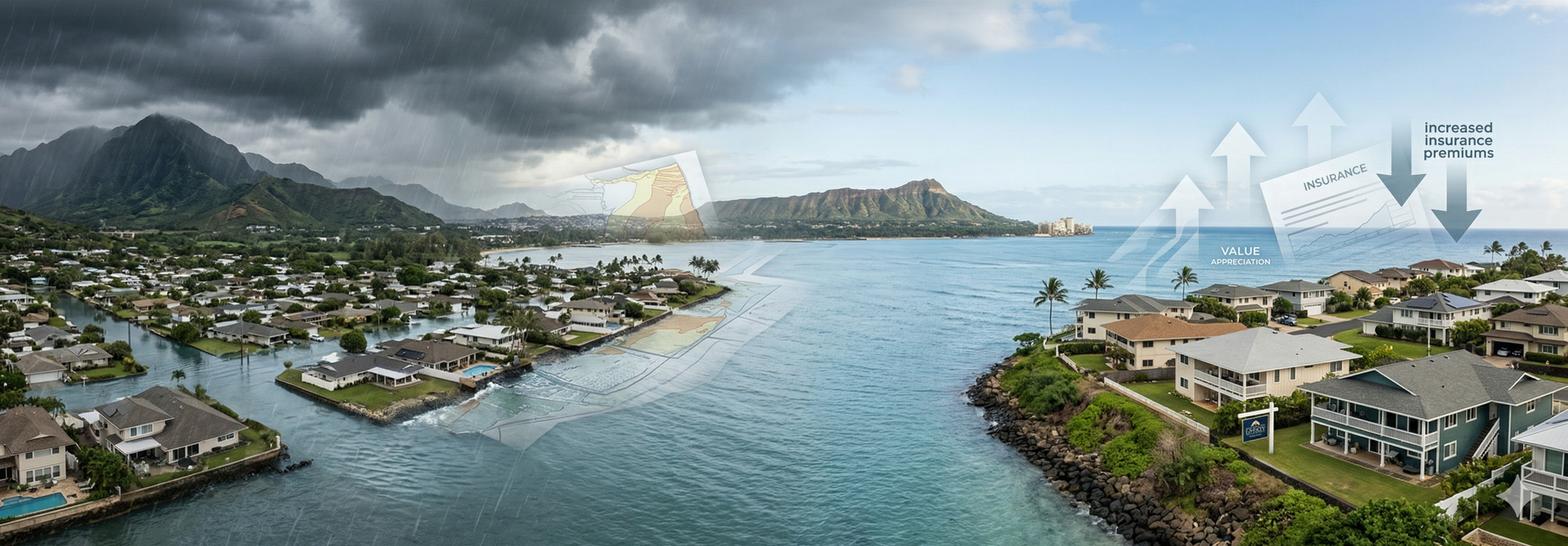
Could you need to move for work? Are you thinking about retirement or downsizing? Can you still afford the property if insurance, repairs or maintenance fees continue rising? Someone who can comfortably hold for another ten years has more room to ride out a downturn than someone who may need to sell within two years.
The market may eventually recover. The real question is whether you can—and want to—wait for it.
2. Don’t Panic Every Time Sales Slow Down
A slower market is not automatically a crashing market. Oahu single-family sales declined 23.2% in 2022 and another 26.3% in 2023. The median price, however, declined only 5% in 2023 and later moved above its previous peak.
Why the difference?
Many owners with low mortgage rates chose not to sell. That limited the number of homes available and helped support prices, even as buyer demand weakened. Fewer sales can mean a slower market without necessarily meaning dramatically lower values.
Pay attention—but don’t let one scary headline make the decision for you.
3. Remember That Waiting Isn’t Free
Holding a property sounds simple: keep it until prices rise again.
But while you wait, the bills keep coming.
You may still be paying for:
- Mortgage interest
- Property taxes
- Insurance
- Maintenance fees
- Repairs
- Special assessments
- Vacancy expenses
If holding costs are eating away at your finances every month, waiting for appreciation may not automatically be the winning strategy.
Sometimes holding makes sense. Sometimes selling and protecting the equity you already have makes more sense.
Run the numbers before assuming that time will solve everything.
4. Know What You Would Actually Walk Away With
I often see homeowners focus on one number: the expected selling price.
But the more important number is your estimated net proceeds.
Start with the likely sales price and subtract:
- Your mortgage balance
- Commissions
- Closing expenses
- Repairs or preparation
- Buyer credits
- Other balances tied to the property
That is a much more realistic picture of your equity.
A Zestimate or online estimate cannot tell you what will actually land in your bank account.
5. Your Property Has Its Own Market
Islandwide numbers are helpful, but your buyer isn’t purchasing the “Oʻahu median.” They’re purchasing your specific property.
Look at:
- Recent comparable sales
- Active competition
- Pending sales
- Expired listings
- Price reductions
- Days on market
- Property condition
- Neighborhood or building concerns
A renovated unit with parking may move differently from an original-condition unit in the same building.
The details matter.
6. Condo Owners: Read What Your AOAO Sends You
I know—association budgets, reserve studies and meeting minutes aren’t exactly exciting weekend reading.
But ignoring them can be expensive.
Watch for:
- Underfunded reserves
- Repeated maintenance-fee increases
- Upcoming capital projects
- Insurance problems
- Large deductibles
- Deferred repairs
- Pending assessments
- Litigation
These issues can affect your monthly expenses, resale value and whether a future buyer can obtain financing.
Your unit may be beautiful, but buyers and lenders are also evaluating the building behind it.
7. Build Enough Reserves to Give Yourself Choices
If your plan is to hold through a slower market, make sure you’re financially able to hold. Set aside money for repairs, insurance increases, maintenance-fee changes, assessments and other surprises. For rental owners, include vacancy and turnover costs. Reserves do more than pay bills. They give you time and choices. Without that cushion, a broken pipe or sudden assessment can turn “I’ll wait for the market to improve” into “I need to sell now.”
8. Plan Before Life Forces the Decision
The worst time to build a real estate strategy is when you’re already under pressure. If you think you might relocate, retire, downsize or sell within the next few years, start reviewing the numbers now. That doesn’t mean you need to list your property tomorrow. It means you can explore your options while you still have control over the timing. Planning early may allow you to make repairs gradually, build reserves, prepare for taxes or wait for a better selling window.
9. In a Slower Market, Strategy Matters More
When buyers have more choices, they become more selective. They notice condition, maintenance fees, insurance concerns, days on market and whether the price makes sense. This is where accurate pricing and presentation become critical. Starting too high can cause a listing to sit, lose momentum and require multiple price reductions. By the time the price reaches the right level, buyers may already view the property as stale. Sometimes the best strategy isn’t simply lowering the price. Seller concessions, closing-cost credits, rate buydowns or prepaid maintenance fees may solve the buyer’s real affordability problem.
For more on that approach, read:
How to Sell Your Oahu Condo Without “Giving It Away”
10. Make the Decision That Works for Your Life
There is no single right answer for every homeowner. One owner may benefit from holding through the market cycle. Another may be better served by selling, renting the property, downsizing or using the equity somewhere else.
Ask yourself:
- What is my mortgage rate and balance?
- How much equity do I realistically have?
- What does the property cost me each month?
- Are major repairs or assessments coming?
- Does this property still support my plans?
- How long am I willing to hold?
A property can be a good investment and still no longer be the right investment for you.
My Bottom Line
Oʻahu real estate has historically recovered from major islandwide downturns. That should give long-term owners some perspective when the market slows. But “eventually” is not the same as “immediately.” You don’t need to predict the market perfectly. You need to understand your property, know your numbers and protect your ability to choose. If you’re unsure whether holding, selling or renting makes the most sense, let’s look at the actual property—not just an online estimate or islandwide headline.
I can help you review the recent sales, current competition, likely selling expenses and building-specific factors affecting your home or condo. Book a Consultation
For the historical numbers behind this discussion, read Part One:
The Myth That Oʻahu Real Estate Always Goes Up — Here’s the Truth
Historical performance does not guarantee future appreciation. Every property and ownership situation is different.